

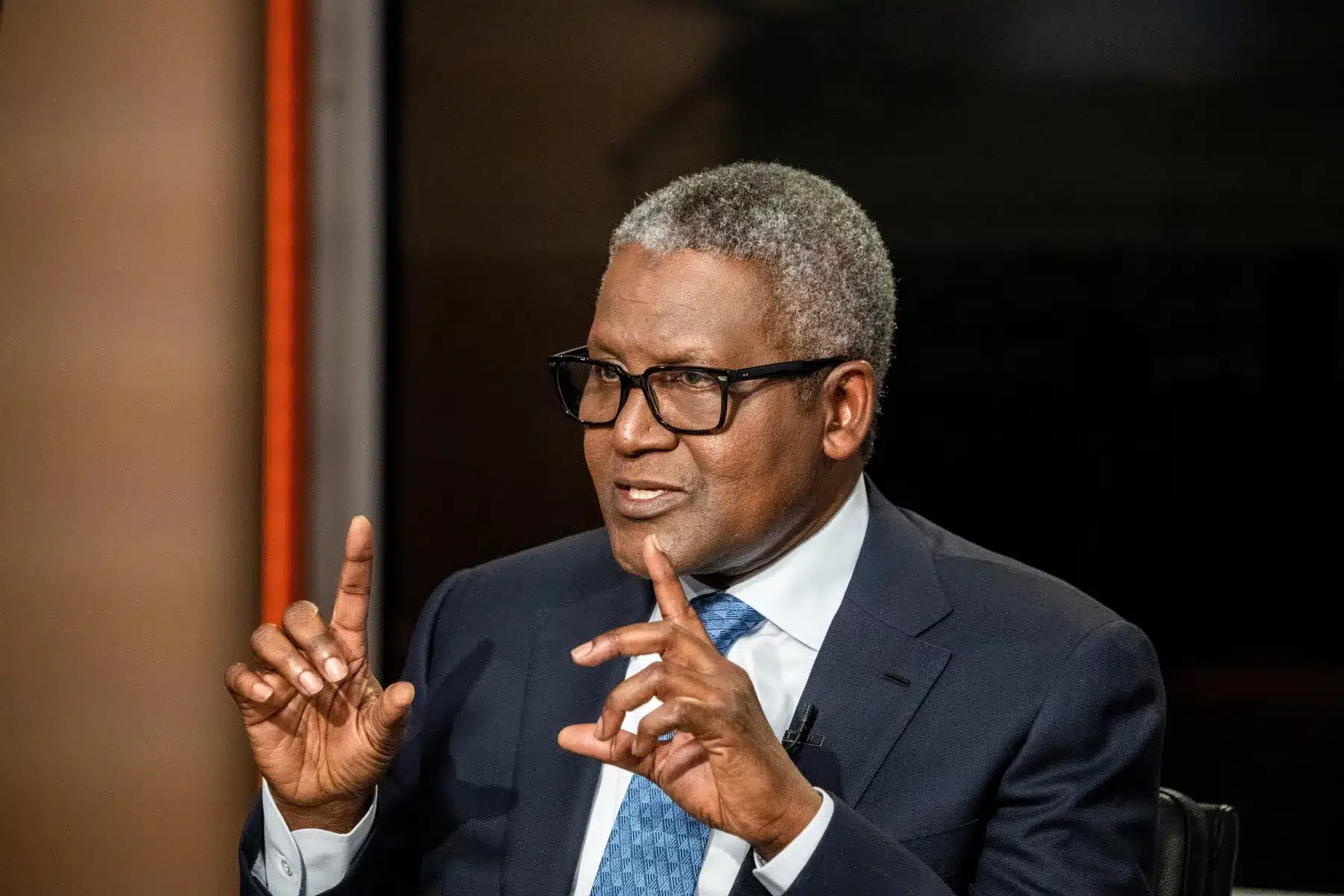
Aliko Dangote has spent much of his life building. Cement plants, fertilizer factories, a massive oil refinery and, behind them, one of the most powerful industrial groups on the African continent. At 69, the Nigerian billionaire now appears increasingly focused on a different question: What will happen to this empire when he is no longer there to run it?
The answer is beginning to take shape thousands of miles away from Lagos, in Dubai.
The Dangote family is developing a family office, a private structure designed to centralize the management of its wealth, investments, governance and philanthropic activities. His daughter, Halima Dangote, who oversees the project, has said the goal is to build an organization capable of supporting the family’s interests for eight to ten generations. The family office is expected to expand its activities from 2027 onward.
It is an unusually long-term ambition, even in the world of the ultra-wealthy. And it may signal a deeper shift in the way some of Africa’s business elites are beginning to think about wealth.
Dangote remains Africa’s richest man. In September 2026, Forbes estimated his fortune at roughly $31.4 billion, although that figure fluctuates with financial markets and the value of his industrial holdings. But owning tens of billions of dollars offers no guarantee that a family will remain wealthy for a century. Much less for eight generations. Economic history is filled with fortunes built by extraordinary founders and then gradually divided among heirs, weakened by family disputes, poor investment decisions or simply the absence of clear rules separating family interests from those of the business.
That is precisely the problem a family office is designed to anticipate.
Unlike a conventional wealth management firm, a family office acts as a kind of financial headquarters for a wealthy family. It can oversee international investments, manage stakes in different companies, coordinate legal and tax advisers, prepare succession plans, structure philanthropy and, most importantly, establish governance rules across generations.
The central question therefore shifts from “How much does the family own?”
to “How will that wealth be governed when the family includes dozens, and eventually perhaps hundreds, of descendants?”
This is where the real challenge of generational transition begins.
In many family businesses, the first generation is relatively straightforward: the founder owns the capital, runs the company and makes the major decisions.
The next generation introduces several heirs. Then come grandchildren, cousins and entirely new branches of the family. With each generation, the number of potential owners increases and their interests become harder to align.
Some descendants may want to run the company. Others may prefer to remain passive shareholders. Some will favor reinvesting profits, while others may demand larger dividends. Others still may wish to sell their stake altogether. Without rules established in advance, a family business can quickly become the stage for conflicts that have little to do with the company’s actual performance.
This is why many large wealthy families use governance structures that determine who may work in the business, how executives are selected, under what conditions shares may be sold and how strategic decisions are made.
In that process, wealth gradually stops depending entirely on the authority of a patriarch and begins to function as an institution.
The Dangote family’s move comes at a moment when many of Africa’s largest family-owned businesses are approaching precisely this delicate stage in their histories: the point at which their founders must prepare the next generation. Available data suggests that succession planning remains underdeveloped.
PwC reported, based on its NextGen research, that about half of African family businesses still lacked a concrete succession plan. The problem is not unique to Africa. Around the world, succession requires families to confront uncomfortable subjects: age, loss of control, illness and death. But when these conversations are postponed, succession can end up being managed in a crisis.
For a large family business, the death or sudden withdrawal of a founder is not merely a private event. It can trigger a governance crisis, alter the ownership of strategic assets and affect thousands of employees.
The issue is particularly significant because family-owned businesses play a central role in African economies. A PwC survey published in June 2026 found that 82 percent of African family businesses surveyed prioritized reinvesting profits, suggesting a strong desire to build for the long term. The challenge now is turning that long-term ambition into institutions capable of surviving their founders.
The choice of Dubai is also revealing.
When Dangote first announced the project in 2024, the family office was already expected to pursue international investments and gradually diversify the family’s wealth beyond its traditional industrial activities.
The logic is familiar among the world’s largest fortunes.
A family may have made its wealth in cement, oil or real estate without wanting future generations to remain entirely dependent on those same industries.
A family office can therefore help transform a concentrated entrepreneurial fortune into a diversified portfolio of family capital, potentially spanning businesses, financial markets, real estate, private equity and co-investments alongside other wealthy families or institutional partners.
Dubai also provides a strategic bridge between Africa, the Middle East, Asia and Europe, precisely the regions where the Dangote family office is expected to deepen its investment relationships.
The significance of the initiative extends far beyond Aliko Dangote’s personal fortune.
For decades, much of the narrative surrounding African entrepreneurship has focused on founders: who built the empire, how much it is worth and which companies they control.
The next question will be different.
Who will know how to pass it on? Building a multibillion-dollar company is one form of entrepreneurial achievement. Transferring it successfully to one’s children is another. Keeping it prosperous once grandchildren, great-grandchildren and cousins become owners requires an entirely different discipline.
That appears to be what Dangote has understood.
His most important project may ultimately be neither a cement plant nor an oil refinery.
It may be the institution designed to ensure that, generations after him, the Dangote name still represents organized capital rather than the memory of a fortune that was once immense.
Articolo di Carlos Lougourou, Sustainability Advisor
